Four weeks ago I wasn’t thinking about traffic.
I was thinking about whether Google would even find the website.
That probably sounds strange, but when you’re building something from scratch there are stages you simply can’t skip. Before visitors, there has to be indexing, before indexing, there has to be content and before content, there has to be a reason for the website to exist.
Phase 1 was about getting the foundations in place.
Phase 2 focused on publishing consistently while improving technical SEO and creating a better experience for readers.
This phase was different, the objective wasn’t simply to publish more articles.
It was to observe what happened once real people began interacting with the website.
Not thousands of people …. Just enough to begin learning.
Looking Beyond Traffic
If someone asked me how many visitors The Frictionless Man attracted during this phase, the answer wouldn’t sound particularly impressive.
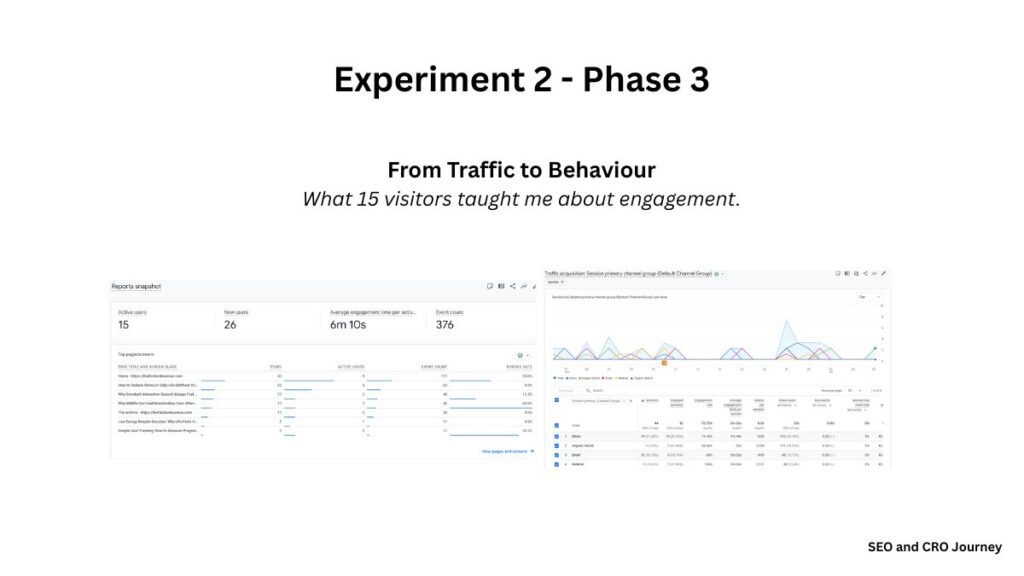
Fifteen active users.
Forty-four sessions.
On paper, those numbers are tiny, but I think they’re also incredibly valuable.
When you’re building publicly, small numbers allow you to see behaviour much more clearly than large numbers do.
Every visitor matters, every article read tells you something and every returning session becomes a clue.
Rather than asking, “Why isn’t there more traffic?” I found myself asking a different question.
“What are these fifteen people actually doing?”
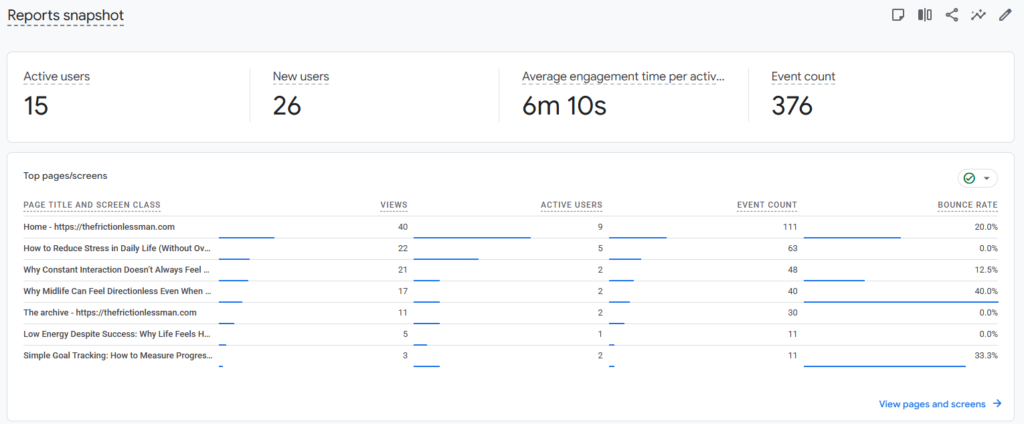
Figure 1: Google Analytics overview showing user engagement during Phase 3.
Engagement Was the Metric That Changed My Thinking
The statistic that surprised me wasn’t traffic, it was engagement.
Visitors spent an average of more than six minutes on the website.
That immediately changed the way I interpreted the experiment.
If people were arriving and leaving after twenty seconds, I’d know there was a content problem.
But six minutes suggests something quite different.
People were reading, they’re not simply landing on an article and disappearing, they’re spending time thinking.
For a website built around slower, more reflective writing, that’s a much more meaningful signal than raw visitor numbers.
Certain Topics Are Beginning to Stand Out
Another interesting observation was that not every article attracted the same level of attention.
Some themes consistently generated more interest than others.
Articles around reducing stress, finding direction during midlife and meaningful human connection were attracting the most engagement.
That isn’t enough data to draw firm conclusions, but it’s enough to begin recognising patterns.
Instead of deciding what readers should find useful, I’m starting to watch what they naturally choose.
That feels like a far healthier way to build content.
Traffic Is Slowly Becoming More Diverse
Something I wasn’t expecting this early was the variety of traffic sources.
Visitors weren’t arriving from one place, some came directly, others arrived through social media and a small number came via referrals.
Organic search also began appearing, even though it remains a very small proportion overall.
That diversity matters.
Rather than depending entirely on one platform, the website is slowly beginning to develop multiple entry points.
At this stage I don’t particularly care which source grows first, the important thing is that they’re beginning to exist.
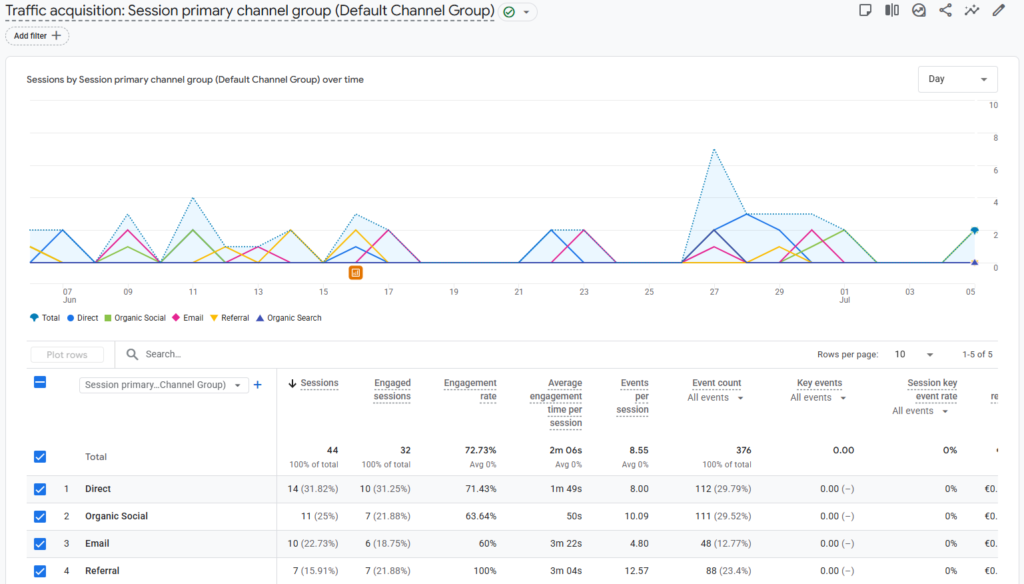
Figure 2: Traffic sources during Phase 3 showing visitors beginning to arrive from multiple channels.
One Unexpected Lesson
Perhaps the biggest lesson from this phase had nothing to do with analytics.
It came from a comment.
Someone working in SEO overseas discovered The Frictionless Man organically and left a thoughtful response.
Objectively, it was one comment.
Subjectively, it represented something much bigger.
It meant the work had travelled beyond my own computer.
Until that point, writing often feels like practising in private.
After that interaction, it started feeling like publishing …. It’s a surprisingly important psychological shift.
Internal Linking Is Becoming the Next Priority
Another pattern became obvious while reviewing the site.
Many of the early articles were written before I had enough content to create meaningful internal links.
That means readers often finish an article without a clear path to continue exploring.
This now becomes one of the largest opportunities on the website.
Rather than writing new content simply because it’s the next scheduled article, I’m beginning to revisit earlier pieces and connect them naturally to newer ones.
Not for SEO alone but for readers.
Someone interested in decision fatigue is probably also interested in reducing mental overload or creating a better weekly reset.
Helping people continue that journey feels like good user experience first, and good SEO second.
What Didn’t Matter As Much As I Expected
Early on I found myself checking traffic far more often than I needed to.
Like most beginners, I wanted reassurance that something was happening, eventually I realised daily numbers rarely tell an interesting story.
Weekly patterns do.
Monthly trends do.
Daily fluctuations mostly create unnecessary emotion.
Ironically, one of the core ideas behind The Frictionless Man is reducing unnecessary mental friction.
Watching analytics every few hours creates exactly the opposite.
Now I review the data with curiosity rather than expectation.
The numbers become feedback, not judgement.
Looking Ahead: Experiment 3 – Building Topical Authority
Phase 3 has convinced me that publishing consistently isn’t enough on its own.
The website now has enough content that the next opportunity isn’t simply writing more articles. It’s helping both readers and search engines better understand how those articles connect.
That will become the focus of Experiment 3: Building Topical Authority.
Rather than measuring success by the number of new articles published, I’ll be concentrating on strengthening the content that’s already there. That means improving internal linking, creating clearer topic clusters, revisiting older articles and continuing to observe how Google responds as the website becomes more interconnected.
I’m particularly interested in whether a stronger content architecture improves indexing, rankings and user engagement over time.
There’s still a long way to go, but the objective hasn’t changed.
I’m not trying to build the biggest website …. I’m trying to build a useful one.
If the process also demonstrates how strategic SEO works in practice, then that’s an experiment worth documenting.
Here’s to success (and fewer 404s)
Chris