An SEO audit can sound like a fairly technical exercise.
Run the website through a tool, find the errors, work through the recommendations and eventually arrive at a nice long list of things that need fixing.
I’ve certainly approached SEO that way before.
The problem is that most SEO tools are very good at finding things that could be improved. They are not necessarily very good at telling you what actually matters.
You can finish an audit with dozens of technical issues, hundreds of keyword opportunities and a long list of recommendations, but still have no clear idea what you should actually do first.
The more I’ve learned about SEO, the more I’ve started to think that a useful SEO audit isn’t really about finding everything that is wrong with a website.
It is about understanding what is preventing the website from doing its job.
That starts somewhere slightly different, it starts with the business.
Start With The Business, Not The SEO Tool
Before looking at crawl errors, broken links or page speed, I think there is a much more important question to answer:
What is this website actually trying to achieve?
That sounds obvious, but it is surprisingly easy to forget when you are looking at SEO data.
A business might want more leads, another might want online sales, another might simply want people to contact them, book an appointment or request a demonstration.
Those objectives should influence how you approach the audit.
If a website is attracting thousands of visitors but very few of them are potential customers, increasing organic traffic may not be the most important problem to solve.
This is something I’ve become much more conscious of through the work I’ve been doing around marketing strategy. Marketing Strategy When Everything Seems Important is particularly relevant here because the same principle applies to SEO: when everything looks important, you need to understand what actually matters to the business.
I would therefore start an audit by asking who the business is trying to reach, what that audience needs and what action the business ultimately wants them to take.
Only then would I start looking at the SEO data.
Can Search Engines Find The Pages That Matter?
Once I understand what the website is trying to achieve, I would look at the technical foundations.
This is where an SEO audit can become overwhelming very quickly.
There may be problems with crawling, indexing, redirects, canonical tags, duplicate content, broken links, page speed, XML sitemaps, structured data and a whole collection of other technical issues.
The temptation is to work through the list from the top.
I don’t think that is necessarily the best approach.
Instead, I would ask a much simpler question:
Can search engines find, crawl and understand the pages that actually matter?
If the website has an important service page that isn’t being indexed, that is obviously worth investigating.
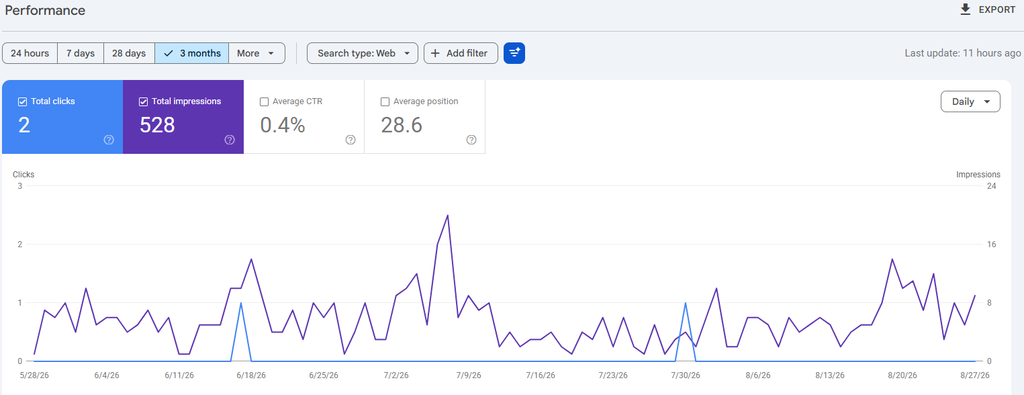
This is where looking at my own website has made SEO considerably more interesting. When I first started looking at Google Search Console, I tended to see the Page indexing report as a list of problems to fix. Over time, I’ve become more interested in understanding why Google hasn’t indexed a particular page and whether that actually matters.
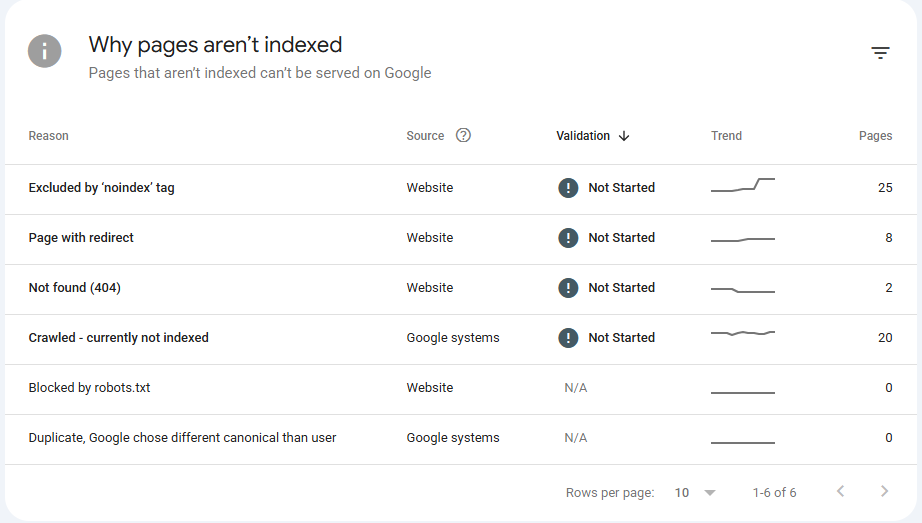
Looking at The Frictionless Man has been a useful reminder of this. Search Console can show you pages that aren’t indexed, but that doesn’t automatically mean something is wrong. Some pages may be deliberately excluded, duplicated, redirected or simply not important enough to warrant attention. The question I now find more useful is not “How many pages aren’t indexed?” but “Are the pages I actually want people to find being indexed?”
If the sitemap contains hundreds of URLs that shouldn’t be there, that may also matter.
But if an SEO tool tells me that a relatively insignificant page is missing something that has no meaningful effect on the customer or the business, I’m not sure it deserves to jump to the top of the list simply because the software has highlighted it in red.
This is one of the distinctions I think is important when conducting an SEO audit.
A technical issue isn’t automatically a business problem.
Sometimes it is, sometimes it isn’t.
The job is to work out which is which.
Are We Attracting The Right Searches?
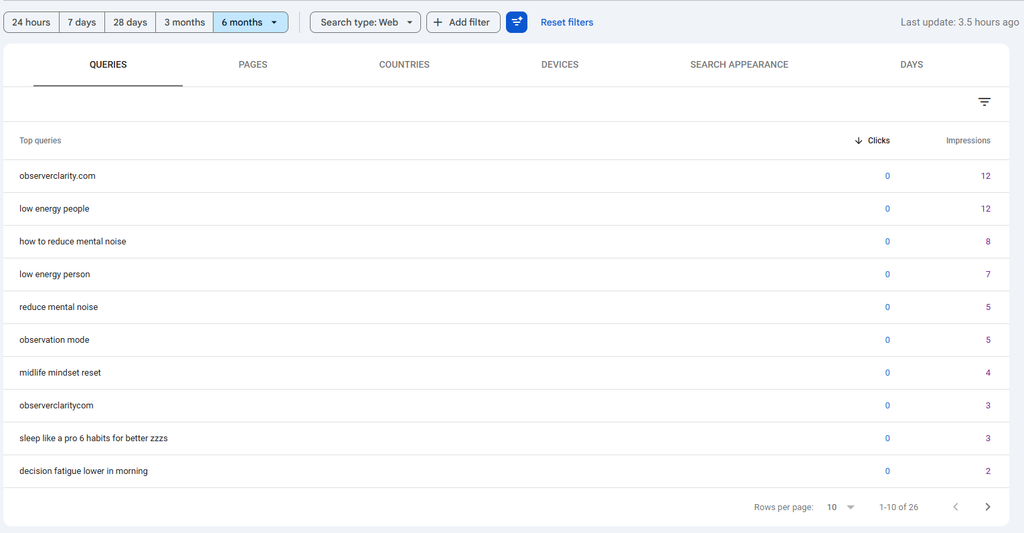
The next question I would ask is whether the website is appearing for the searches its audience actually makes.
This is where the keyword research work we’ve already explored becomes important.
Keyword Research: Understanding Search Intent, Not Just Search Volume
Keyword rankings can be useful, but rankings on their own don’t tell you very much.
A website might rank for hundreds of keywords and still struggle to attract the right audience.
Equally, a page might rank reasonably well for a highly relevant search that has far more commercial value than dozens of less relevant keywords combined.
This is why I don’t think an SEO audit should simply produce a list of keywords the website could rank for.
I would want to understand the relationship between the search, the person making it and what they are likely to do next.
Someone searching for general information is in a different position from someone comparing solutions and someone searching for a specific product is different again.
The search itself gives us a clue about intent.
The audit should help us understand whether the website is responding appropriately.
Does The Content Actually Satisfy The Search?
This is probably where SEO becomes much more interesting to me.
Once someone arrives on a page, what happens?
Does the content actually answer the question that brought them there?
Does it provide enough information to help them make progress?
Does it feel as though the page was written for them, or does it feel as though it was written primarily to rank?
I think this is an important distinction because it is possible to create technically well-optimised content that isn’t particularly useful.
A page can contain the right keyword, have a sensible title, good headings and appropriate internal links and still leave the visitor thinking, “Okay, but what do I actually do now?”
That is not necessarily an SEO problem in the traditional sense.
It is an audience and customer journey problem.
This is why the work I’ve been doing around positioning is so closely connected to SEO. How to Build Marketing Positioning Around a Real Audience.
If you understand the audience properly, you have a much better chance of creating content that answers the question they actually have rather than the question you think they should have.
And that matters because search isn’t really the destination, it is the beginning of a journey.
Where Does The Customer Go From Here?
A useful SEO audit shouldn’t stop at the point where someone lands on a page. I would also want to understand what happens next.
Is there an obvious next step?
Can the visitor find the information they need to move from awareness into consideration?
If they are already comparing options, does the page help them make a decision?
If they are ready to buy or enquire, is the process straightforward?
This is where SEO and CRO start to overlap.
The website doesn’t simply need to attract someone, it needs to help them progress.
That is why I found the idea behind From Search to Action: Understanding the Customer Journey so useful. Different searches can represent very different points in the customer journey, and the content needs to reflect that.
An SEO audit therefore gives you an opportunity to look beyond traffic and rankings and ask whether the website is actually helping people move towards a decision.
Sometimes the answer will be yes.
Sometimes there will be a surprisingly large amount of friction between the search result and the action the business actually wants.
That friction is worth finding.
Look For Friction, Not Just Errors
This is probably the biggest change in how I think about an SEO audit now.
I don’t want to create a list of everything that could be better.
I want to find the things that are getting in the way.
That could be technical, it could be content, it could be poor search intent alignment, it could be unclear positioning, it could even be something as simple as making the visitor work too hard to understand what the business actually does.
This is where the audit becomes less about SEO in isolation and more about looking at the website as a system.
A page might rank well but attract the wrong audience, another might attract the right audience but fail to answer their question, another might provide excellent information but offer no obvious next step whilst another might convert well but be almost impossible for search engines to discover.
None of these problems necessarily appears in exactly the same SEO report.
But together they tell you something about how the website is performing and that is much more useful than a list of isolated warnings.
What Should We Fix First?
This is the part of the audit I think is most important.
You have found the problems.
Now what?
If there are twenty things that could be improved, I don’t think the answer is automatically to fix all twenty.
I would start thinking about three things:
Impact.
How much could this change actually improve the website or the business?
Relevance.
Does it affect something important to the audience, customer journey or business objective?
Effort.
How difficult is it to make the change?
A relatively small change that improves an important page may be far more valuable than spending three days resolving a technical issue on a page that receives almost no traffic and has little commercial importance.
That doesn’t mean technical SEO isn’t important, it means prioritisation matters.
This is something I’ve found myself coming back to repeatedly in my marketing work. Marketing Strategy When Everything Seems Important.
When everything is presented as a priority, nothing really is.
An SEO audit should therefore finish with decisions, not simply data.
Turn The Audit Into An Action Plan
Once I had worked through the website, I wouldn’t want the final output to be a fifty-page report full of screenshots and coloured warnings.
I would want something much more practical.
A short list of the most important issues.
What is happening?
Why does it matter?
What should be changed?
Who needs to do it?
And what should happen next?
I would probably separate the recommendations into three groups.
Fix now.
These are issues that are clearly preventing important pages from being discovered, understood or used effectively.
Improve next.
These are opportunities that could create meaningful improvements but aren’t preventing the website from functioning.
Monitor.
These are things worth keeping an eye on but they don’t justify immediate attention.
That final category is important.
Not every problem needs to become a project.
Sometimes the correct strategic decision is simply to leave something alone.
An SEO Audit Should Make The Website Easier To Understand
The more I learn about SEO, the less interested I am in producing the longest possible list of things that are wrong.
I’m much more interested in understanding the relationship between the business, the audience, search behaviour, content and the customer journey.
That is what makes an SEO audit useful.
You start with the business objective.
You understand the audience.
You check whether search engines can find the important pages.
You look at whether the website is attracting the right searches.
You examine whether the content satisfies the intent behind those searches.
Then you follow the customer through the website and look for unnecessary friction.
Finally, you decide what deserves attention first.
That sounds considerably simpler than running a website through five different SEO tools and trying to fix every warning they produce.
And I think that is the point.
The purpose of an SEO audit isn’t to prove that you can find problems.
It is to understand which problems are actually worth solving.
Final Thought
When I first started learning SEO, I think I would have approached an audit very differently.
I would have been impressed by the amount of data.
I would have looked at every error, every warning and every opportunity and probably assumed that the more comprehensive the audit was, the better it must be.
I don’t think that anymore.
Data is useful, but only when it helps you make a better decision.
A website doesn’t need to be perfect …. It needs to work.
It needs to be discoverable by the right people, provide useful information when they arrive and make it reasonably easy for them to take the next step.
That is what I would want an SEO audit to uncover.
Not every possible problem, the problems that matter.
Because ultimately, an SEO audit isn’t really about fixing a website.
It is about understanding why the website isn’t doing something it should be doing, deciding whether that matters and then working out what to do about it.
And perhaps that is the most useful lesson I’ve taken from learning SEO.
Don’t get lost in the data.
Use it to find the friction.
Then decide what is actually worth fixing.
Here’s to success (and fewer 404s)
Chris
Want to apply this thinking to real SEO audit?
I created a practical SEO Audit Planning Workbook to help identify the things that could make a meaningful difference to your website and decide what deserves your attention first.