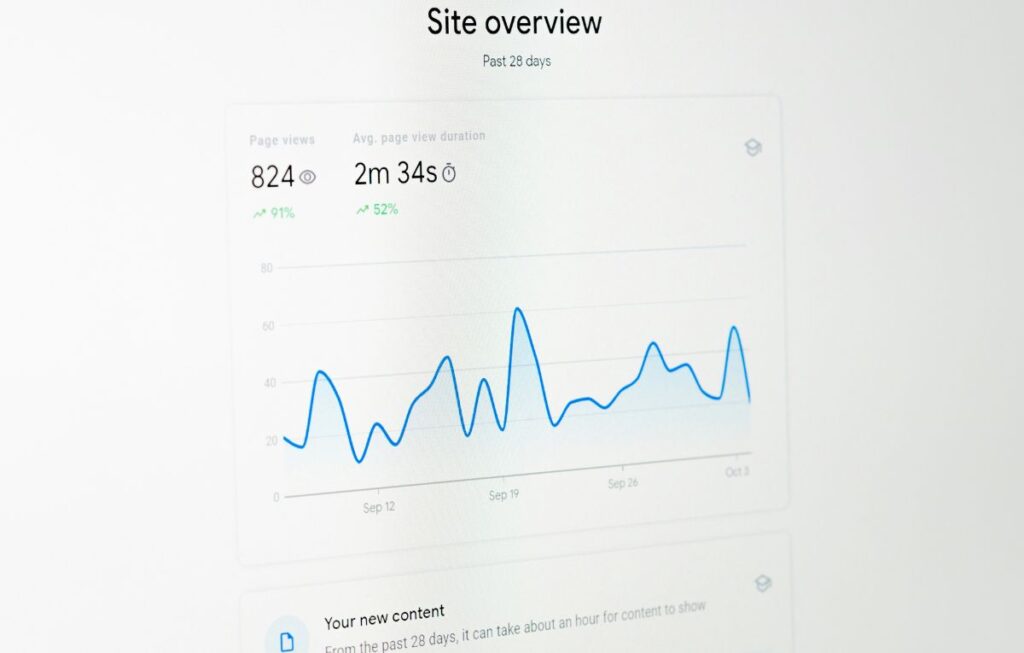

This site documents my transition from learning digital marketing to testing and understanding it through structured experimentation.
Over the past year, I’ve spent a significant amount of time learning about SEO, analytics, and conversion optimisation. Like many people entering digital marketing, I started with articles, guides, case studies, and frameworks that promised to explain how growth works online. Each concept made sense on its own. Rankings depended on relevance and authority, user behaviour could be measured, and conversion rates could theoretically be improved through structured testing.
At first, this felt like clear progress. The more I learned, the more marketing appeared logical — almost mechanical. If the right inputs were applied, the right outputs should follow. But after a while, I noticed something uncomfortable: despite understanding more terminology and techniques, I didn’t feel meaningfully closer to understanding marketing itself.
Most learning happens in hindsight. You study explanations of user intent, analyse successful campaigns after they have already worked, and read breakdowns that make outcomes feel inevitable in hindsight. Everything appears clean and rational when viewed retrospectively. Real marketing, however, doesn’t exist in hindsight. It exists in uncertainty, incomplete information, and decisions made without knowing whether they will succeed. I realised I had learned how marketing is explained, but not how it actually feels to practice it.
That realisation led me to change my approach. Instead of continuing to accumulate theory, I built a small secondary website designed specifically as a testing environment — a place where ideas could be applied rather than endlessly analysed. The goal was not performance or scale, but understanding. I wanted a space where I could run controlled experiments, make assumptions explicit, and observe outcomes without over-optimising for success.
Rather than asking what experts recommended, I began asking what would happen if I tested ideas myself. I started running small experiments that kept structure consistent while changing one variable at a time — usually messaging or framing. The experiments were intentionally simple. A headline adjustment, a shift in tone or a different way of presenting the same underlying idea. Each test was designed to answer a narrow behavioural question rather than produce dramatic results.
What surprised me most was not the data itself, but how experimentation changed the way I thought about marketing. Publishing content normally feels expressive; you create something and share it. Running an experiment transforms content into a hypothesis. Every sentence carries intent, every structural decision becomes deliberate, and every outcome — including silence — becomes information. Details that once felt stylistic began to feel strategic. Word order mattered, tone felt measurable, engagement stopped being validation and became feedback.
Before running experiments, I tended to think about marketing through its disciplines: SEO, CRO, analytics, and content creation. Each appeared to be a separate skill set to master. Experimentation revealed something different. These disciplines are not the core of marketing; they are instruments. The real work happens earlier, in defining the problem, deciding what behaviour you are trying to influence, and determining what success should actually mean before measurement begins.
SEO can attract attention, CRO can refine journeys, and analytics can quantify outcomes, but none of these tools decide why something should exist or what assumption is being tested. That layer belongs to strategy. Recognising this shifted my focus away from optimisation alone and toward understanding decisions — what questions are worth testing and that learning is valuable regardless of outcome.
Another unexpected lesson was psychological rather than technical. Experimentation introduces a level of discomfort that passive learning avoids. Publishing content allows distance; if something underperforms, it is easy to move on. Designing a test requires committing to an assumption publicly and accepting the possibility of being wrong. That experience changes the relationship with marketing. Results become less about proving competence and more about refining understanding.
Over time, marketing began to feel less like promotion and more like structured curiosity. Instead of asking how to make something perform better, I found myself asking what behaviour the outcome was revealing. Metrics stopped feeling like goals and started functioning as signals. Progress became less about immediate growth and more about developing clearer thinking.
I originally approached SEO and CRO as technical disciplines to learn. Running experiments reframed them as tools that support a broader process of inquiry. The most valuable learning has come not from dashboards or rankings, but from defining hypotheses, observing outcomes, and adjusting assumptions based on evidence rather than theory.
Looking back, the biggest change has not been measurable performance but perspective. Learning taught me what marketing looks like from the outside. Experimentation began teaching me how marketing decisions are actually formed. That distinction has reshaped how I approach new problems and how I evaluate ideas.
I started learning marketing to understand algorithms and systems. Increasingly, I find myself more interested in understanding people — how they interpret messages, how small framing differences influence perception, and how structured experimentation can reduce guesswork in decision-making.
The technical knowledge still matters, but it now feels like a foundation rather than the destination. What began as an effort to learn SEO has gradually become an effort to understand strategy — not as a theory, but as something developed through deliberate testing, observation, and reflection.
Here’s to progress (and fewer 404s)
Chris