Starting this journey into SEO has been both exciting and a little daunting. After years in a completely different industry, I’ve found myself fascinated by what makes a website work—what grabs someone’s attention, what gets ignored, and what turns a casual visitor into someone who sticks around. Learning SEO: A Beginner’s Guide to the What, Why, and How was written to highlight the importance SEO plays along with offering some insights.
In today’s digital world, having a website is just the beginning. The real challenge is getting people to find it. This is where Learning SEO (Search Engine Optimization) comes in. It’s the process of making a website more discoverable and usable, helping people find the content they need while giving me insights into what works—and what doesn’t.
In this post, I want to share what I’ve learned about SEO so far—what it is, why it matters, and how I’m using Google tools to track performance on my website. Along the way, I’ll reflect on the practical steps I’ve taken, the challenges I’ve faced, and how I’m gradually building a solid foundation for future growth.
While this post focuses on traditional Search Engine Optimization — optimizing for Google and other search engines — it’s worth noting that the concept of SEO is evolving. Some marketers now refer to a broader idea called “Search Everything Optimization,” which considers AI assistants, voice search, and searches on platforms beyond Google. I haven’t implemented these strategies yet, but they’re something to explore in the future as search continues to expand.
What is SEO – Search Engine Optimization
According to Ahrefs, Search Engine Optimization, or SEO, is the:
“Process of improving a website’s content, structure, and authority to help search engines understand it better and connect it with the right audience.”
Great top line points from SemRush, anyone Learning SEO would benefit from a watch.
Put simply, SEO improves websites so that they appear higher in search engine results — such as Google — when people search for relevant terms.
So, if I want my website to be seen, SEO helps me optimize webpages, improve technical performance, and build credibility through links and engagement. In essence, SEO increases visibility and drives free traffic from search engines.
How Search Engines Understand Websites
SEO uses crawlers to:
- Find pages on the internet
- Understand what those pages are about
- Rank them based on relevance, quality, and usefulness
This means SEO focuses on making a website easier for search engines to understand and more valuable to users.
If you would like to read the process I went through when creating my website I wrote a post about it: Building My First Website with WordPress
The Three Main Types of SEO
1. On-Page SEO
On-page SEO involves optimizing the content and elements on your website. Some examples include:
- Keywords: Understanding what people are searching for
- Page titles and headings: Structuring content for clarity and relevance
- High-quality, relevant content: Ensuring information is valuable
- Internal links: Connecting related content to improve navigation
- Images and alt text: Helping search engines understand visual content
There is a great example of this on a previous post I wrote: How to Write Blogs for SEO: What I Learned the Hard Way.
2. Off-Page SEO
Off-page SEO involves actions taken outside your website to build authority and credibility:
- Backlinks: Other websites linking to yours
- Brand mentions: Building recognition across the web
- Social sharing: Promoting content on social media channels
3. Technical SEO
Technical SEO focuses on the behind-the-scenes improvements that affect search performance:
- Website speed: Ensuring pages load quickly
- Mobile-friendliness: Optimizing for smartphones and tablets
- Secure connections (HTTPS): Building trust with users and search engines
- Site structure and indexing: Making it easy for crawlers to navigate
- Fixing broken links and errors: Avoiding technical issues that harm rankings
Why SEO is Important
Understanding the importance of SEO is crucial for anyone running a website. Based on my learnings so far, here are the key reasons:
- Increases Organic Website Traffic
SEO brings visitors who are actively searching for your products, services, or content, resulting in targeted and free traffic. - Builds Trust and Credibility
Ranking high in search results signals authority. Users trust websites that appear prominently in Google. - Improves User Experience
Modern SEO isn’t just about rankings — it’s about making websites faster, easier to navigate, and more enjoyable for users. - Cost-Effective Compared to Paid Advertising
Unlike paid ads, SEO can continue driving traffic long after initial efforts, making it a long-term investment. - Reaches Active Searchers
SEO helps you connect with people actively looking for solutions, rather than interrupting them with ads.
Tracking SEO Performance with Google Tools
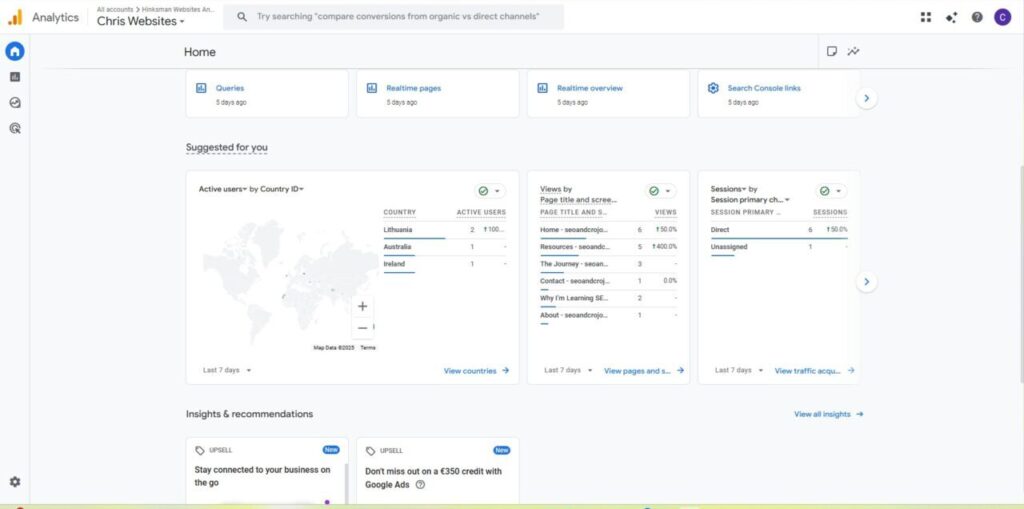
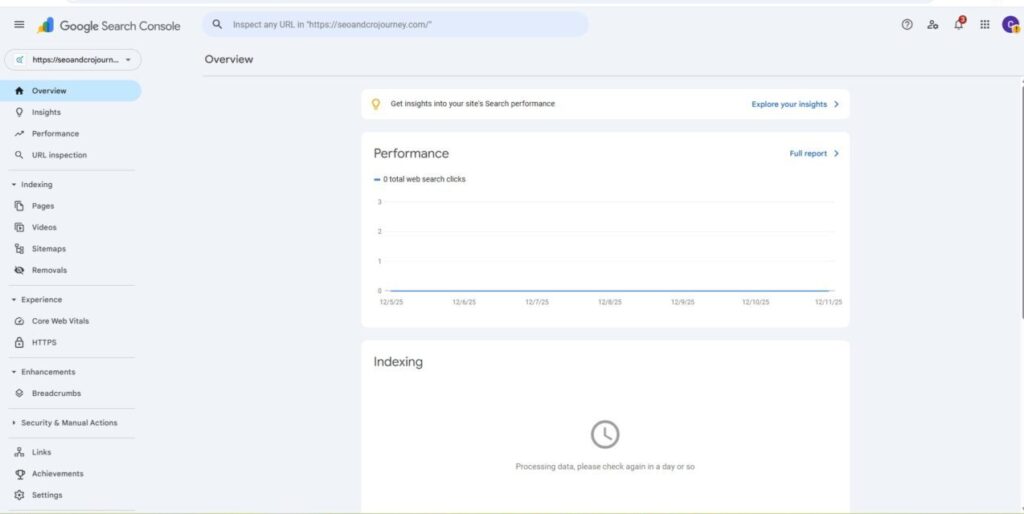
After understanding what SEO is and why it matters, I implemented Google Analytics and Google Search Console on my website (www.seoandcrojourney.com). Both were very straightforward to install via plugins, and linking them to my domain was quick.
Although these tools won’t do SEO for me, they will show what is working, what isn’t, and where to improve.
Google Analytics – Understanding User Behaviour
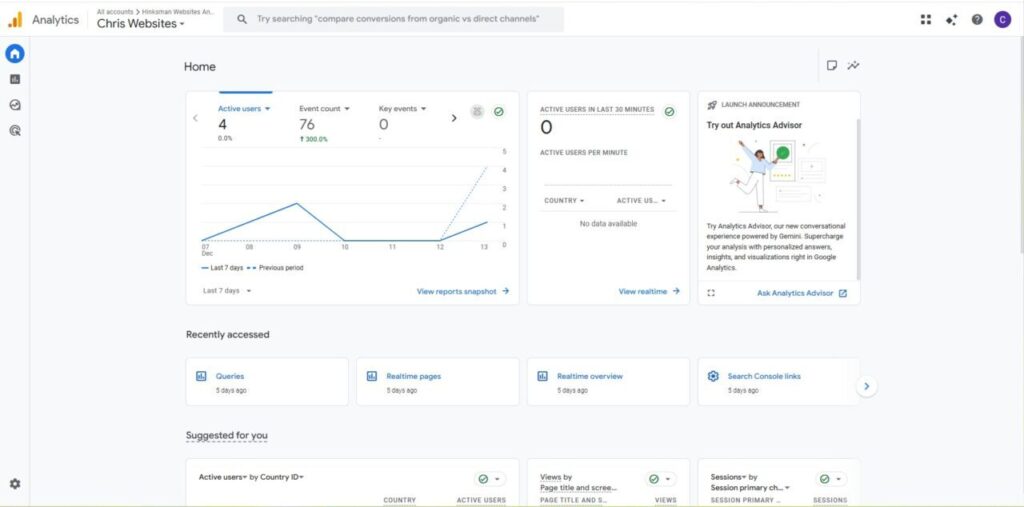
Google Analytics tracks what users do once they arrive on my website. While SEO brings the right traffic, Google Analytics helps me understand:
- Organic Traffic: Visits from search engines
- Landing Pages: The first pages users see
- Engagement Metrics: Time on page, engagement rate
As my confidence grows, I plan to dive deeper into metrics such as bounce rate, page-specific traffic, and user flow. By reviewing data gradually, I can avoid feeling overwhelmed and focus on actionable insights — improving content quality and fixing underperforming pages.
Currently, my traffic is minimal, but even baseline analytics provide a foundation to track growth and learning over time.
Google Search Console – Understanding Search Performance
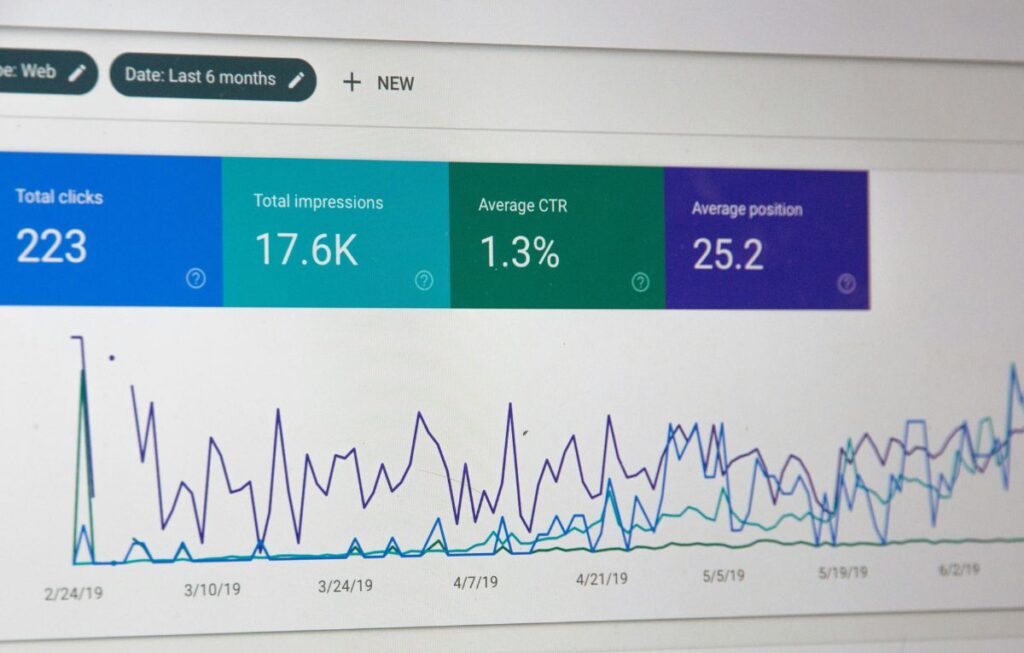
Google Search Console gives insight into how my website performs in Google’s search results. It shows how Google discovers, indexes, and ranks my pages.
Key areas I focus on:
- Performance Report: Queries, clicks, and impressions
- Keyword Ranking: Which search terms bring users
- Indexing Report: Ensuring pages are discoverable
- Page Experience: Mobile-friendliness and Core Web Vitals
- Sitemap Submission: Helping Google crawl all pages
Together with Google Analytics, these tools provide a foundation for tracking SEO performance, monitoring user behavior, and refining strategies.
Exploring CRO Tools – Hotjar and Microsoft Clarity
To complement SEO, I looked into Hotjar for Customer Retention Optimization (CRO). Unfortunately, the acquisition by Contentsquare and changes in implementation made it difficult to set up.
Instead, I installed Microsoft Clarity, which was far easier to integrate and will work alongside Google Analytics and Search Console. While it’s too early to share insights, I plan to use Clarity for understanding user behaviour and improving conversions in future posts.
Key Points to Remember About SEO
From my journey so far, I’ve learned some crucial lessons:
- Avoid keyword stuffing – it harms readability and ranking
- Mobile optimization is essential – most users browse on mobile devices
- Avoid duplicate content – unique content ranks better
- Focus on quality content, structure, and navigation – these matter more than tricks
SEO is a long-term strategy, not a quick fix. Results often take weeks or months, but consistent effort, tracking, and combining SEO with CRO yield sustainable growth.
Conclusion
Learning SEO, for me, hasn’t been about chasing rankings or quick wins. It’s been about understanding how search engines work, how people behave online, and how small changes can make a real difference over time.
Right now, I’m still very much in the learning phase. I’m figuring out what SEO actually looks like in practice—how content gets discovered, how technical foundations matter, and how data can guide better decisions. Some things are clicking quickly, others are taking a bit more time, and that’s all part of the process.
What’s become clear, though, is that SEO isn’t something you “finish.” It’s something you build, test, review, and improve consistently. By starting with the basics—solid content, clear structure, and the right tracking tools—I’m laying a foundation I can build on as my confidence grows.
This site is part experiment, part learning log, and part accountability. I’m documenting what I try, what works, what doesn’t, and what I need to go back and rethink. Over time, I expect both the site and my understanding of SEO to evolve together.
I don’t have all the answers yet—and that’s exactly the point. This journey is about progress, not perfection. If you’re on a similar path, I hope sharing my experience helps you feel a little less overwhelmed and a bit more confident about starting where you are.
Here’s to progress (and fewer 404s)
Chris